
I came to the United States in 2016 for school. I used to live in Wisconsin, in the American Midwest, where there are not many Chinese people. Every time I go to a Chinese restaurant, I notice that there are always two menus.
One menu features the “authentic” Chinese dishes we love: sour soup with beef, sweet-and-sour ribs, twice-cooked pork—essentially all the familiar home-style dishes you would expect.
The other menu is American Chinese food. It is filled with names that feel both familiar and unfamiliar to me as someone who grew up in Guangdong. There’s Moo Goo Gai Pan—which is just “mushroom chicken slices” pronounced in Cantonese. And then there are dishes like sesame chicken: sweet, sticky, crispy—something that looks like Chinese food, but also doesn’t.
Is this the Chinese food I know?
I’ve wanted to work on a project about the history of Chinese food in America for a long time. This year (I wrote this piece in 2023), I took a qualitative research class and a course in food anthropology. Using assignments as an excuse—and taking advantage of the time they gave me—I did some preliminary research on the topic.
Because I spent most of the semester having fun, I ended up cramming all my reading into the final weeks. There were too many books I wanted to read and too little time.
I moved from the history of General Tso’s chicken, to the stigma around MSG, to why San Francisco is called “San Francisco,” to the Chinese Exclusion Act, to Jewish Christmas traditions, and then to early Chinese American writers.
While writing this paper, I felt something difficult to describe—a kind of attachment that I couldn’t quite let go of. It felt like trying to scoop up the moon’s reflection from water, like searching for the answer to the universe among the double-petaled tulips in front of Trinity Church in Boston.
Some days, while reading, I would feel so excited that I wanted to shout. Other times, for no clear reason, I would start to cry.
Useless sympathy. An overly sensitive core. Long, rambling interview transcripts. Fragmented English grammar.
At moments like this, all of it comes together, forming a kind of meaning that flows through the text.
I read about restaurant owners in interviews, Chinese laborers who left the mines, Taishanese immigrants who pooled money to open restaurants.
I felt that none of them were me—and all of them were me.
Let’s begin.
1
Why did people immigrate to the United States?
For China, the mid-19th century was a time of chaos.
The First Opium War (1839–1842) marked the beginning of China’s modern era of humiliation. The Treaty of Nanjing and a series of unequal treaties imposed by foreign powers placed heavy economic burdens on the population, often passed down through taxation.
Beyond war, natural disasters further worsened living conditions.
Take Taishan in Guangdong—one of the primary sources of Chinese migration—as an example. During this period, the region experienced fourteen floods, seven typhoons, five earthquakes, four epidemics, and five severe famines. Financial instability also took its toll. In 1847, a British banking crisis spread to Guangdong, causing warehouses in Guangzhou to collapse and leaving around 100,000 people unemployed.
Meanwhile, across the Pacific, gold was discovered near a small settlement called Yerba Buena—what we now know as San Francisco.
The California Gold Rush of 1849 attracted thousands of “Forty-Niners” from around the world, all dreaming of striking it rich.
Early Chinese immigrants to California were almost all from Guangdong. In the mid-19th century, a sea voyage from Guangdong to California took about 35 to 45 days—much shorter than traveling to East Coast cities like New York or Boston. Trade connections already existed between Guangdong and California, so migration was not entirely unexpected.
There were two main groups of immigrants: merchants from Guangdong, and laborers struggling to survive who hoped to find better lives in America.
Unlike many American gold miners, Chinese “Forty-Niners” often pursued wealth through commerce rather than mining. During this time, Chinese merchants opened restaurants named after familiar places in China—Canton Restaurant, Macao Restaurant, Woosung Restaurant—hoping recognizable names would attract non-Chinese customers.
At the time, Chinese restaurants typically had only one menu, serving the same dishes to both Chinese and non-Chinese diners. These restaurants could be surprisingly refined—at Woosung Restaurant in the mid-19th century, diners could enjoy delicacies like bird’s nest and sea cucumber.
At the same time, Chinese restaurants also provided affordable meals for miners. A meal might cost around one dollar, compared to one to five dollars elsewhere.
California today is a major agricultural state, exporting nuts, fruits, vegetables, and rice. But its agricultural system didn’t fully develop until the 1860s. Before that, Chinese merchants relied on trade networks to import ingredients from Guangdong, allowing them to operate restaurants at relatively low cost.
What about the second group of immigrants?
Around the same time, roughly 300,000 Chinese workers labored in mines, farms, railroads, and factories. Because they accepted lower wages, non-Chinese workers increasingly saw them as threats.
As gold became harder to find, hostility toward Chinese immigrants grew. This led to a series of anti-Chinese movements and violent incidents. The Rock Springs Massacre, for example, resulted in the deaths of 51 Chinese coal miners. In Oregon’s Hells Canyon, more than 30 Chinese miners were robbed, mutilated, and murdered—yet the perpetrators were never held accountable.
These acts of violence forced many Chinese workers out of mining and manufacturing and into the restaurant industry.
The situation worsened with the Chinese Exclusion Act, which severely restricted Chinese immigration. For ten years, Chinese laborers were barred from entering the United States. Those already in the country faced strict limits on reentry.
Employment opportunities were scarce. One exception was merchant visas granted to certain Chinese business owners. In 1915, restaurants were added to the list of approved businesses—but only “high-end” establishments qualified. In today’s terms, opening such a restaurant required between $110,000 and $190,000 in startup capital.
Few Chinese immigrants had that kind of money. Instead, they pooled resources with family and friends, often rotating management responsibilities among investors.

2
Do Chinese people really eat dogs, cats, and rats?
When I was in school, American classmates would sometimes ask me, cautiously:
“Have you ever eaten dog meat?”
Whether or not people eat dog meat is a separate discussion. But the question itself reflects a broader stereotype about Chinese food and Chinese people.
As someone who grew up in China, the question makes me uncomfortable—though it’s hard to articulate exactly why.
Chinese cuisine generally doesn’t impose strict taboos on ingredients. As the saying goes, Cantonese people eat everything. Research on Chinese restaurants often includes similar observations: ingredients uncommon in Western diets can be transformed into delicacies.
In 1987, the Los Angeles Times listed the top ten Chinese restaurants in the city. One of them, Wonder Seafood Restaurant, offered dishes like abalone, duck hot pot, and squab with plum sauce. The owner even highlighted a specialty: three-snake soup. In traditional Chinese medicine, this dish is considered warming and beneficial for circulation and joint health. Even today, dishes like this can still be found in some high-end Cantonese restaurants.
So in a sense, Americans aren’t entirely wrong—Chinese cuisine does sometimes use ingredients that are less common in Western cooking.
But why does the question about dog meat still make me uncomfortable?
Early references to Chinese people eating dogs and rats date back to 1833, when missionary S. Wells Williams visited China. In his travel writings, he claimed that visitors often mentioned dishes such as bird’s nest, “dog ham,” and “cat stew,” along with rats, snakes, and insects prepared in strange ways.
In 1854, a Boston publication even printed a joke menu from a Chinese restaurant listing items like “cat steak,” “fried rat,” and “dog soup.” By 1897, advertisements for rat poison depicted Chinese men eating rats, implying both the product’s effectiveness and a sense of racial inferiority.
Over time, these narratives shifted from describing unfamiliar ingredients to portraying Chinese food as dirty, unhygienic, and inferior—and by extension, Chinese people as lesser.
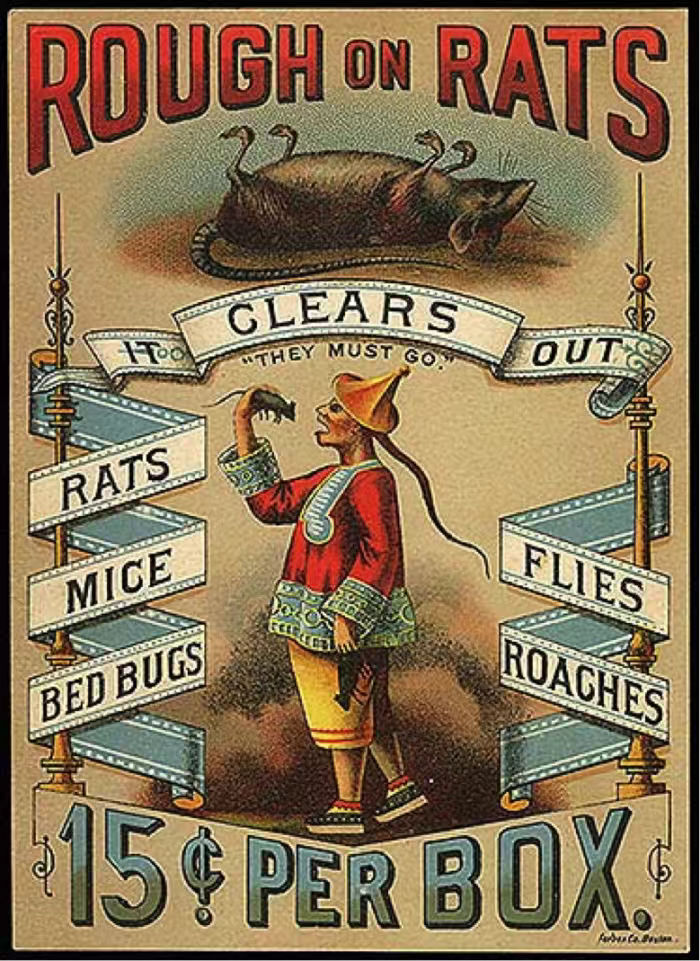
These comments were never really about food. They were about race and politics.
Chinese American writer Lee Chew once explained that the rats consumed in China were raised animals, fed on grains like rice and sugarcane. The idea that “Chinese people eat rats” is not a neutral observation about diet—it is an exaggerated and racialized stereotype.
American Chinese food has had to contend not only with these stereotypes, but also with the stigma surrounding MSG.
In 1968, Dr. Ho Man Kwok published a letter in the New England Journal of Medicine describing symptoms like headaches after eating Chinese food—what became known as “Chinese Restaurant Syndrome.” MSG was widely blamed. Chinese restaurants were criticized for using it.
However, a 1992 review by the U.S. Food and Drug Administration found no conclusive evidence that MSG is harmful to human health. Later research, including studies by Kerr and others, suggested that negative perceptions of MSG are rooted less in science and more in psychological responses—particularly fear of unfamiliar cultures.
Today, we explored the experiences of early Chinese immigrants in the United States, as well as the many stereotypes surrounding Chinese restaurants.
In the next piece, we’ll take a closer look at dishes like sesame chicken, chow mein, and chop suey—and I’ll also talk about why American Chinese restaurants often have two separate menus.
Thank you for reading, and I’ll see you next time.
 Ingrid ZH | Fangruo’s Cereal — Writing, Food, Travel & Coaching
Leave a comment