
Chow Mein, Chop Suey, and General Tso’s Chicken
Chinese cuisine has a long and rich history. Traditionally, food in China has always been treated with great care and attention. During the Qing dynasty, the renowned writer Yuan Mei compiled Suiyuan Shidan, a cookbook documenting hundreds of recipes. Earlier, in the Yuan dynasty, Jia Ming wrote Yinshi Xuzhi, which discussed everything from types of water used in cooking, to heat sources, to the “hot” and “cold” properties of ingredients.
Traditional Chinese food culture emphasizes the nature of food—its balance and effects on the body. Beyond satisfying hunger, food is also valued for its health benefits. In recent years, the concept of “Food is Medicine” in American nutrition circles echoes this philosophy.
Yet these delicate and intricate aspects of Chinese culinary culture are largely absent from American Chinese food in the 19th and 20th centuries.
As mentioned in the previous essay, the development of American Chinese food has always been shaped by its environment.
In business, the rules have not changed much: there must be a market, customers must be willing to pay, and the food—or service—must appeal to them.
Immigration restrictions and anti-Chinese violence in industries like mining and manufacturing forced many Chinese immigrants to seek alternative livelihoods. Jobs that white Americans avoided—laundries and restaurants—became opportunities.
By the late 19th century, Chinese laundries and restaurants had become increasingly common in the United States. At the same time, the rise of consumer culture encouraged Americans to outsource everyday tasks. Why cook at home when you could eat out?
Chinese restaurants, with their affordability, attracted large numbers of customers. Dining out—once a luxury—became accessible to ordinary people.
During this period, the primary customers of Chinese restaurants were lower- and middle-income groups, as well as socially marginalized communities. A Jewish man in New York once recalled his childhood:
“Chinese restaurants felt to me like the Metropolitan Museum of Art—they were the strangest and most fascinating places my parents took me. I loved them both.”
As an affordable, everyday cuisine, American Chinese food found its place—and its success—in American society.
When we talk about American Chinese food, three iconic dishes stand out: chow mein, chop suey, and General Tso’s chicken.
Of the three, only chow mein resembles a dish commonly found in China. The English term “chow mein” comes from the Cantonese pronunciation of 炒面. However, the American version differs from the Chinese original. Traditional Chinese chow mein typically uses thin wheat noodles and a soy-based sauce, while the American version often uses thicker egg noodles with a heavier, thicker sauce.
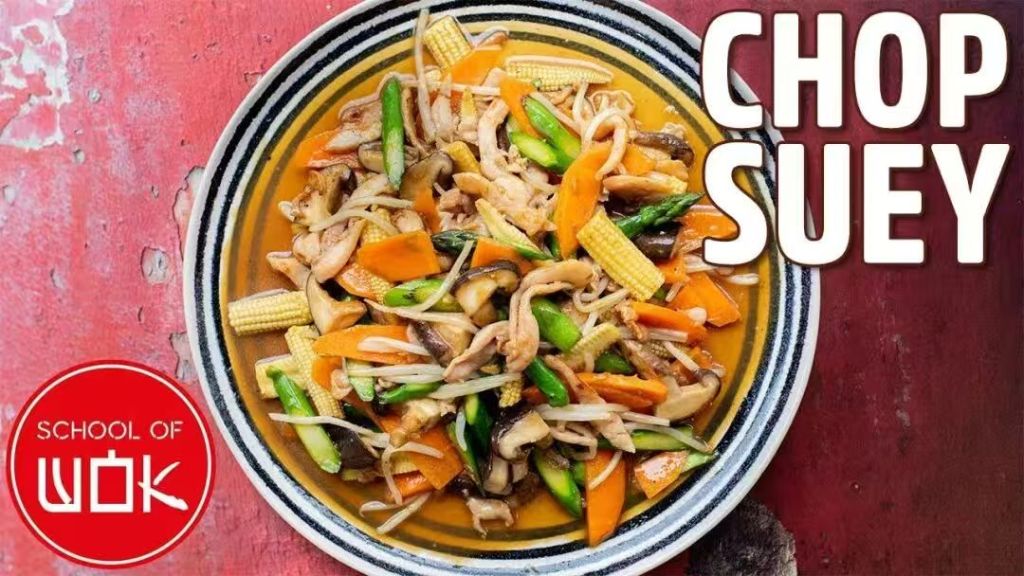
Chop suey has a more ambiguous origin. One theory suggests it was created by Chinese immigrant cooks in San Francisco in the late 19th century. In essence, it resembles a stir-fry—using locally available vegetables like carrots, snow peas, bell peppers, broccoli, and mushrooms.
As the author of The Fortune Cookie Chronicles noted in the documentary The Search for General Tso, chop suey is simply a combination of vegetables and meats that Americans are familiar with and willing to eat.
Another story attributes its creation to a visit by Li Hongzhang to the United States. Supposedly, when he expressed dissatisfaction with Western food, Chinese chefs prepared a stir-fry using available ingredients. When asked what the dish was called, he reportedly replied, “This is just chop suey”—a mix of odds and ends.
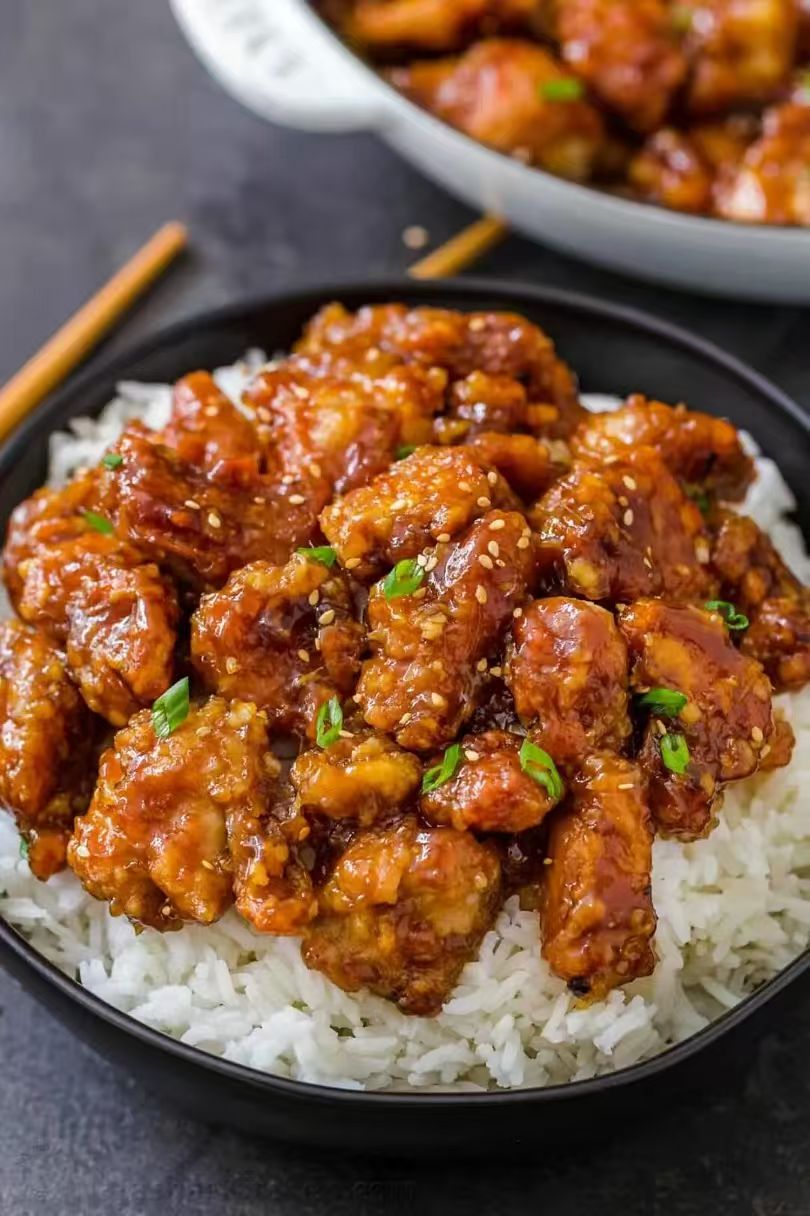
General Tso’s chicken is perhaps the most famous dish of all.
If you’ve spent any time in the United States, you’ve likely encountered it—whether in Flushing, Phoenix, California with its abundance of regional Chinese cuisines, or even in sparsely populated areas like South Dakota.
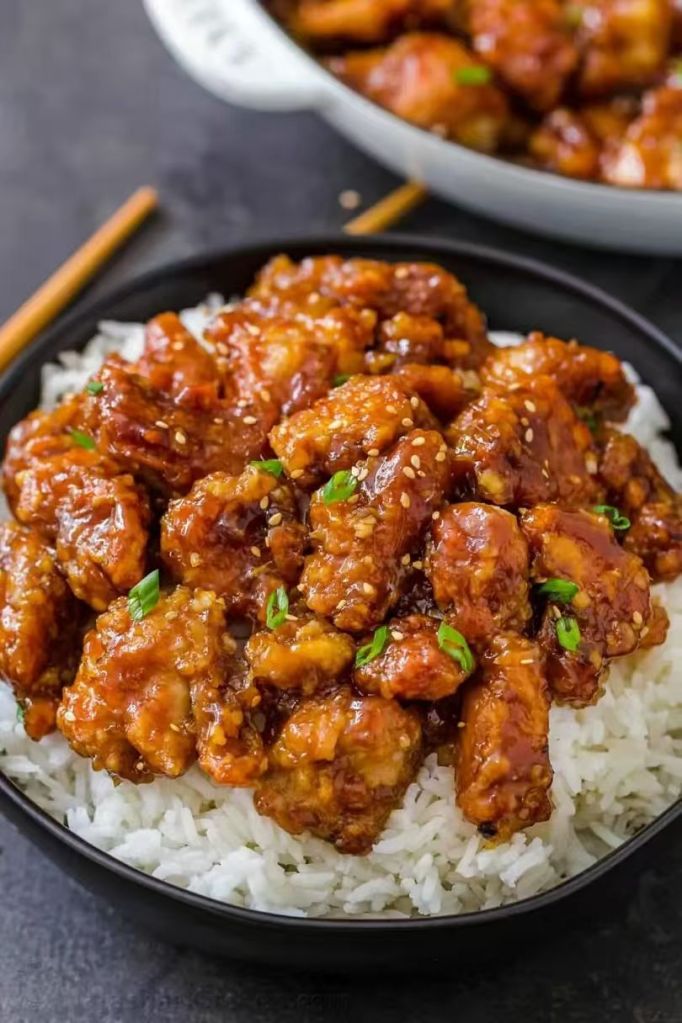
The dish consists of deep-fried chicken coated in a sweet, glossy sauce. It is one of the best-selling items in American Chinese restaurants.
Yet it does not exist in China, nor does it have any real connection to General Tso himself or to his home province of Hunan.
Its origins are debated, with multiple chefs claiming to have invented it. Most agree, however, that it was created by Chinese immigrant chefs in America. The name likely comes from the historical figure Zuo Zongtang—chosen simply because it sounded memorable and authoritative.
In short, these classic American Chinese dishes emerged within a specific historical and social context. They blend elements of Chinese culinary tradition with local tastes and market demands.
Are they delicious? That depends on personal preference.
Are they successful? The more than 40,000 Chinese restaurants across the United States speak for themselves.
Why Do Chinese Restaurants Have Two Menus?
Even though the origins of dishes like chop suey are uncertain, their popularity in American Chinese restaurants is undeniable. By the late 20th century, these dishes could be found almost everywhere.
So why do Chinese restaurants in the U.S. often have two menus?
In fact, early Chinese restaurants sometimes had more than two. In addition to a Chinese menu (often written in both Chinese and English) and an American Chinese menu (usually in English only), some restaurants in the early 20th century also offered a third menu featuring American dishes—hash browns, steak, fried egg sandwiches.
The Chinese-language menu typically included more authentic dishes.
As one restaurant owner explained in 1903, all of this was driven by customer demand. What Americans were willing to try—and what they were not willing to give up—shaped the decisions of restaurant owners and chefs.
For example, a Chinese restaurant in New Orleans serves General Tso’s alligator, as well as a hybrid dish combining Cantonese slow-simmered soup with Southern-style okra.
As one chef put it:
“Wherever we go, we don’t cook for ourselves—we cook for others.”
So, is American Chinese food authentic?
As one author wrote in Chop Suey, Americans enjoy Chinese food because it is convenient and affordable, but they have not always regarded it as a cuisine worthy of deeper appreciation.
Cost is one factor. Using local ingredients like carrots and snow peas is more economical.
Demand is another. What a restaurant serves depends largely on what its customers want to eat. If a restaurant primarily serves non-Chinese customers, their tastes will naturally shape the menu.
There have been attempts to introduce more “authentic” Chinese flavors. P. F. Chang’s is one example.
Before its founding, Chinese food in the U.S. was not considered something that could command higher prices. In 1975, its founder, Philip Chiang, tried to make sweet-and-sour pork less greasy—removing ketchup and reducing the starch in the sauce to create a more authentic flavor.
Customers reacted angrily:
“What happened? We liked it the old way!”
In many ways, restaurants like P. F. Chang’s offer a softer, more “Americanized” version of Chinese cuisine.
At its core, the question of authenticity is not just about food—it is about identity. It asks whether Chinese immigrants are accepted in American society, and how they negotiate that acceptance.
The thick or thin sauce coating a piece of General Tso’s chicken carries within it a long negotiation—a push and pull over culture, identity, and belonging.
Today, as more Chinese immigrants arrive in the United States, Cantonese cuisine is no longer the only dominant form of Chinese food. We now see more regional cuisines—Shanghai, Sichuan, Hunan.
In places like the San Gabriel Valley in California, where 30–40% of the population is Chinese, American Chinese food is almost nowhere to be found.
In those restaurants, there is usually only one menu—written in both Chinese and English.
As one interviewee in From Canton Restaurant to Panda Express put it, Chinese immigrants and their descendants today are able to live with “a Chinese sense of identity, using an American way of thinking.”
And now, when members of the Chinese diaspora take a bite of General Tso’s chicken—or a soup dumpling—can they see their own reflection shimmering in the oil on the plate?
Afterword
After finishing this project, I feel a kind of reconciliation with myself.
While writing, I often found myself crying for no clear reason. I am not an immigrant, yet through interviews and academic narratives, I felt the pain of migration deeply.
From gathering materials for a graduate project to completing this full translation, the process took about a month.
I know my writing is not perfect. I haven’t read enough. But at some point, you have to let go.
I completed my early education in China, then moved to the United States for college, worked for a year, and returned to graduate school.
I started this blog in my senior year of college. Despite being articulate in spoken Chinese and loving literature since childhood, I struggled to write even a few smooth, coherent sentences. (To be fair, my English wasn’t great either.) I felt embarrassed by my lack of fluency.
Three years later, I’ve finished writing about a topic I’ve wanted to explore since moving to the U.S. seven years ago. I’ve translated it fully into Chinese.
I no longer ask myself questions like: Who am I? Where am I from? Where will I go?
There is only one thing I want to do.
I want to tell the stories of food.
Thank you for reading.
I’ll see you next time.


Leave a Reply