
01
Last month, I was planning the trip I’m now on — a month-long road trip I’d been thinking about for a long time. The main destination was the icebergs of Newfoundland, setting out from the eastern United States. While mapping the route, I realized I could loop through a place called Prince Edward Island. I’ve always had a soft spot for islands; I never pass up a chance to get to one.
I was also doing some reading before the trip. One of my favorite ways to use AI is to ask it for book recommendations. I asked: based on my driving route, what would you suggest?
It said: Anne of Green Gables.
Anne of Green Gables was probably the first real book I ever read — not a slim picture book with pingyin (Chinese pronunciation marks) printed above every character, and not an extension of the school curriculum. It was a book my mother chose.
Every night before bed, she would read to me. She must have read through many books — The Little Prince, Totto-Chan — and every time, I always wanted more, yet I always fell asleep almost immediately. Then one day it occurred to me: I could read the books she was reading myself.
One evening, my mother read the part where Anne loses Marilla’s amethyst brooch, and then skipped ahead to Anne joining her classmates on a picnic.
Half-asleep, I jolted awake and shouted at her:
“Wait! You skipped the part where Anne claims she went out with her best friend Diana and that’s how she lost the brooch!”
My mother understood immediately. From that night on, she could never skip a single line.
Prince Edward Island is the real-world inspiration behind Green Gables. I would visit Cavendish, the town that became the model for the story’s setting, and Charlottetown, where Anne goes to study. Afterward, I’d take a ferry from Wood Island to Caribou, then continue on to Nova Scotia and Halifax.
Anne is a child overflowing with imagination — she gives names to every tree and every stream. She has a heart that hungers for beauty: she loves wide blue skies and green fields, and she loves puffed-sleeve dresses made from gingham. On her way to Sunday school one day, she decorates her hat with buttercups and gets roundly scolded by her teacher. She is an orphan, raised by a brother and sister who take her in.
The first time I read this book, it was in Chinese. This time, I read it in English. The plants in the pages gradually became the plants around me. Buttercup literally means a cup of butter. Buttercups have bright yellow petals that really do look like butter melting in a warm bowl.
The emotional world of the book feels a little thin to me now, and yet every feeling in it is one I genuinely lived through as a teenager: dreading math classes, worrying I wasn’t good enough, feeling ashamed of my body and my face, and loving my friends with complete sincerity.
For this trip, I built a fold-out sleeping platform for my car. The boards are made of fir — the very tree Anne mentions again and again. My car is dusted with fir shavings, and it’s carrying me toward the place that first opened the world of books to me.
In Anne’s eyes, the Lake of Shining Waters smiles back at the sky, and the brook hides the secrets of quiet, shadowy spirits. Maybe I was always that kind of person. Maybe Anne taught me how to imagine this way. By now, there’s no way to know.

(Forgot-me-not from Lovers Lane)
02
Not long ago, a close friend went through a breakup. We started watching a MasterClass series on attachment styles together.
I am, I think, a person who is both anxious and avoidant. I know this about myself. I watch it happen.
Sometimes I think: god, why am I always like this — anxious enough to read catastrophe into everything, avoidant enough to want to disappear alone every single day. Everything floods into my skull at once, waves hammering against a cliff face.
Why am I not a securely attached person? Why am I not one yet?
I was turning this over in my mind while crossing a long bridge over the sea. It was a beautiful bridge, and I wanted so badly to just stare out at the Atlantic. But I was driving. I had to pay attention.
And then, mid-thought, traffic slowed to a stop. A section of the bridge was under construction; cars could only pass one direction at a time.
Just like that, I was set down, gently, in the middle of the ocean.
My car sat on the suspension section of the bridge. Traffic moved past me from the other direction, and my body swayed slightly with the bridge’s pulse.
I stared at the water. There were fine, intricate patterns in the waves — dancing in a way I couldn’t quite follow.
A podcast was playing. It was the victory speech of New York City’s newly elected mayor, Zohran Mamdani:
“I am not a perfect candidate. I am too young, even as I try very hard to get older. I am a democratic socialist. I am a Muslim. And most outrageously of all, I will not apologize for any of it.”
I burst into tears in the middle of stopped traffic. He was holding every part of himself without flinching.
A little while later, I crossed onto the island. Prince Edward Island.
Driving along, I spotted a small handmade sign on someone’s front lawn:
Baby Fox Around, Drive Slow
I found it so unbearably sweet that I started crying again.
The beaches here are red, beautiful enough to make you hold your breath. They reminded me of snowdrops just pushing up through the soil in early spring, so delicate I was afraid my cold breath might frost them over. Then I remembered: my body is warm.
Everything passes through me. I feel everything.
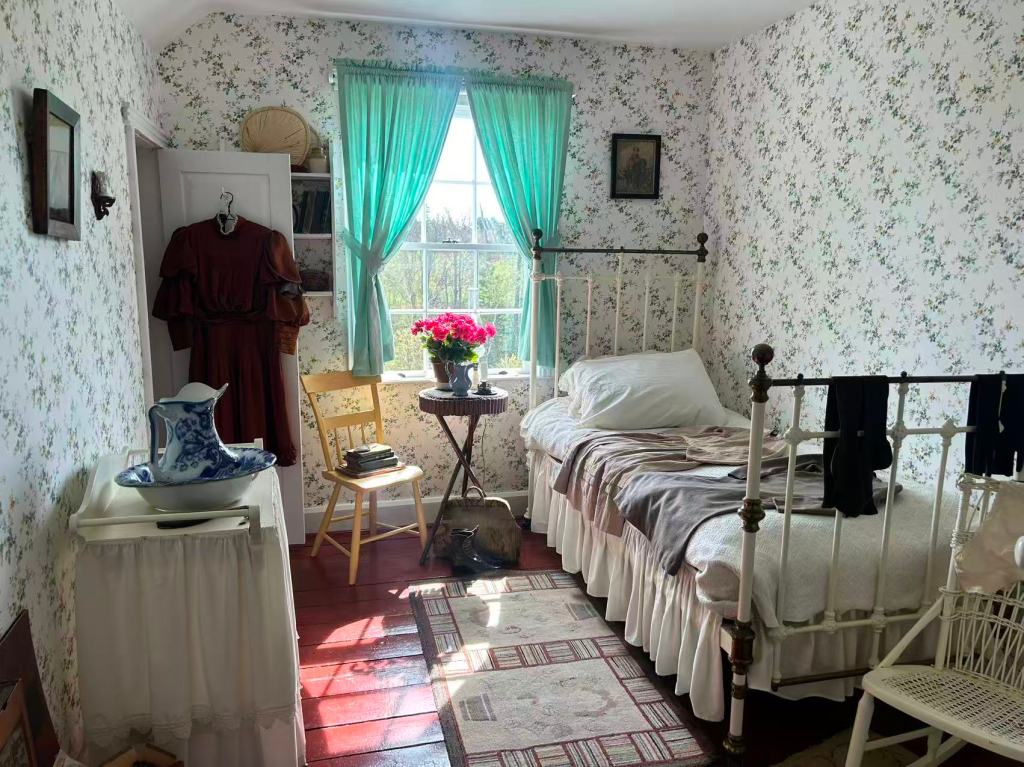
The whole island feels like an Anne of Green Gables theme park. The author’s birthplace, her home, her relatives’ homes — all of it has been turned into museums.

I went to see a musical on the island: Anne’s love story, a natural continuation of the books. Throughout the show, Anne cannot bring herself to accept the boy’s love for her. She loves him deeply, and still she can’t let it in. Her story mirrors almost exactly that of her adoptive mother, who never married.
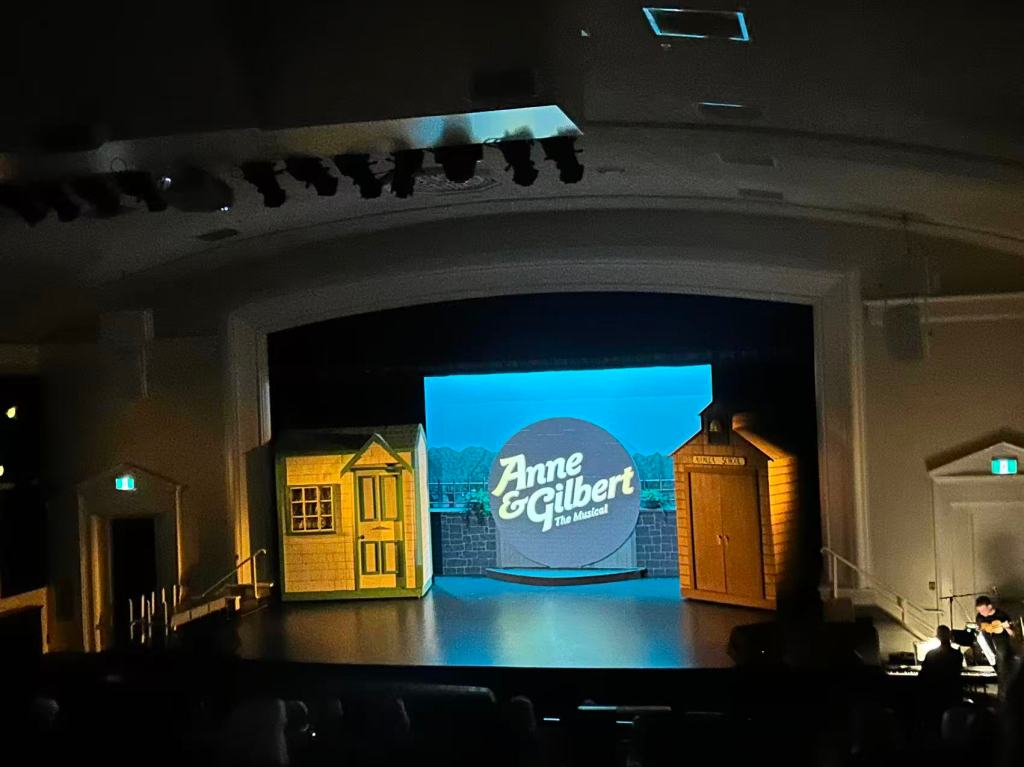
The musical was held in a university concert hall packed with people from all over the world, all of them moved by Anne’s story.
It is, in the end, a fairly simple story — not much historical depth, which makes sense; it was written for children.
In the final scene, the boy finds letters Anne’s parents wrote before they died, to Anne, and to each other. In them, they describe their love: for one another, and for her. Anne realizes that her own heart has been full of love all along. She finally tells the boy.
I was sitting in the back of the theater, crying so hard I could barely breathe.
On Prince Edward Island, I cried and cried. It might look like the way I might have cried at five years old, finishing Anne of Green Gables for the first time and discovering, with some surprise, how soft and tender I was inside. The way I cried at twenty-seven, arriving in Anne’s homeland, and deciding that I would embrace that tenderness together with her.
 Ingrid ZH | Fangruo’s Cereal — Writing, Food, Travel & Coaching
Leave a comment