
I woke up dizzy.
The place I stayed last night had overpowering sweet scent, and it left me with a headache.
I finished work early this morning and rushed to catch the ferry. I’m on Prince Edward Island, making my way to Nova Scotia. This August, I’m planning a wedding in China. Even mid-trip, the preparations keep finding me. My mom sent a WeChat message saying she wanted to get things ready for the bridal bedroom — a full set of red bedding, red rinsing cups, wedding shoes. Red ones too, I imagine.
I told her no. I don’t like any of it, and I don’t want to buy a pile of things we’ll use once, just for the show.
She insisted. We had an argument.
Planning a wedding is its own kind of field study. My mom worries the dress I pick will be too cheap, that I’ll look like my family does not value me. In Cantonese tradition, the bride wears a lot of gold jewelry at the wedding — gifts from the groom’s parents. The more gold, the more they love you. It’s hard to explain this to my husband’s family, who come from a different culture entirely. Honestly, I find the custom suffocating. My mom felt that too little gold would reflect badly on her, so she offered to buy some herself. I didn’t want any of it weighing on me. We eventually landed on a compromise: she buys the jewelry for herself, I borrow it for the wedding, and return it when it’s over. Everyone wins.
There’s a strange tension in doing all of this alone on the road — handling something so loud and communal from somewhere so quiet and solitary. I understand exactly why my mom cares about 面子 (mianzi, literally means face or how one is perceived by others). I also understand exactly why I don’t. We argued on the phone while I drove, and eventually hung up. The soil and sandstone on Prince Edward Island are rich in iron oxide, which makes the roads rust-red. I drove along that red road, and somewhere along the way, the anger I had about the color red just faded. I almost forgot about it.
You’re supposed to arrive forty minutes early for the ferry. Getting on a boat is one of those things that makes me unreasonably happy. I can’t explain it — floating on water just does something good to me. I brought a book, hoping to read on the crossing. In two days I’ll have another boat ride, seven hours long. I’m already looking forward to it.
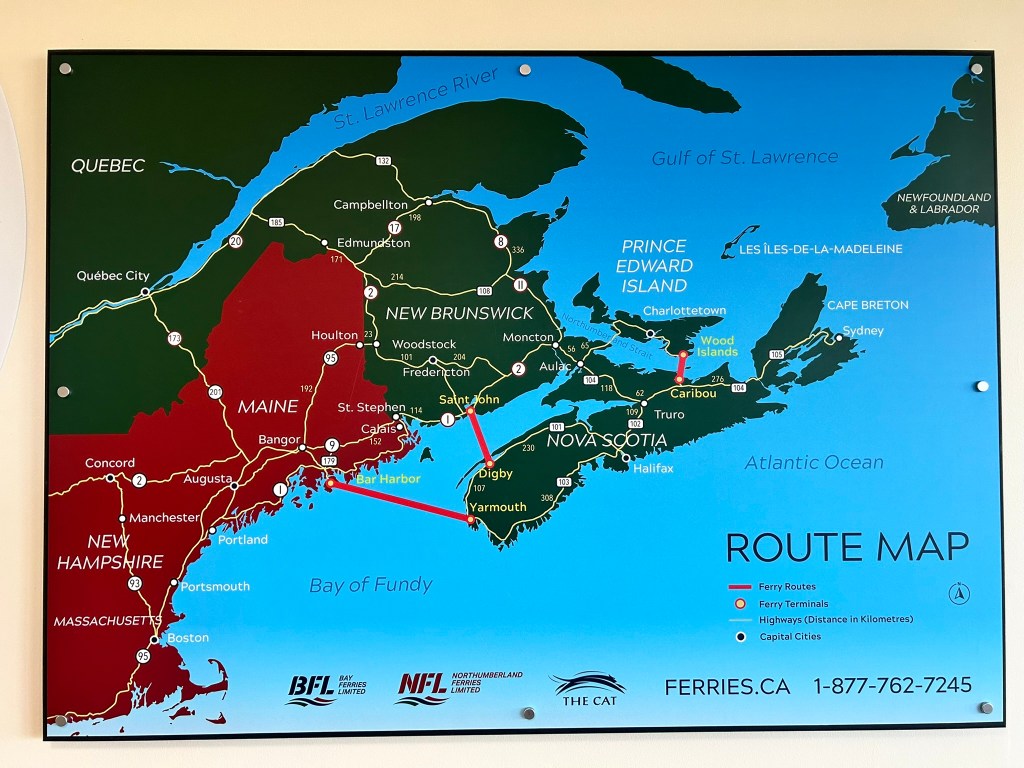
(I was taking the Wood Islands to Caribou route)
After docking, I went looking for a place to have lunch. I’ve been traveling with a small camp stove, so I can cook for myself whenever I want. I found a park with a little shelter in the parking lot and started boiling water.
A man jogging along the path stopped to chat. He said there was a nicer picnic table deeper in the park, not far at all.
We ended up talking about his tattoos. I’m close to the ocean here in Nova Scotia — maybe it’s a cliché, but it seems like the sea brings maritime culture, and maritime culture brings tattoos. He walked me through his: ocean waves, a heart, an octopus, his two kids’ names, and the birthstones for him and each of his children.
I picked up my pouch of rehydrating fried rice and walked into the forest.
Two red squirrels were chasing each other through the trees, squabbling. They looked nothing like the fat-tailed gray squirrels back in Maryland — smaller, redder, with little tufted tails. I thought they were chipmunks at first. I ate my chicken fried rice while they nibbled at the new spring grass. The white-throated sparrows here sound different from the ones in the States too.
Later in the afternoon, I arrived in Halifax, the capital of Nova Scotia. It has a quality somewhere between Vancouver and Toronto — ocean on one side, skyline on the other. Or maybe more like San Diego crossed with Pittsburgh: cargo ships moving through the harbor, gulls resting on the shore.
I visited the Canadian Museum of Immigration. Theie galleries had comfortable sofa chairs, each facing a small screen. You could pick up a handset and listen to immigrants from around the world talk about why they came to Canada. I’m slowly becoming an immigrant myself — and there’s something strange about traveling through different countries, finding the same story told in different ways.
Two interactive exhibits stayed with me. In one, you play an immigration officer: you read an applicant’s file, the policies of the time, newspaper headlines, and decide whether to grant them status. In the other, you step into the shoes of a historical immigrant. You might be an Irish person fleeing famine in the nineteenth century, or someone arriving from Haiti. The game walks you through a choice of provinces, weighing things like existing immigrant communities, land quality, and religious demographics. Quebec had fertile farmland for the Irish, but it was largely French-speaking. Alberta had established Irish settlements, but less arable land. Every place you choose to go, you leave something behind. Every place asks something of you in return.
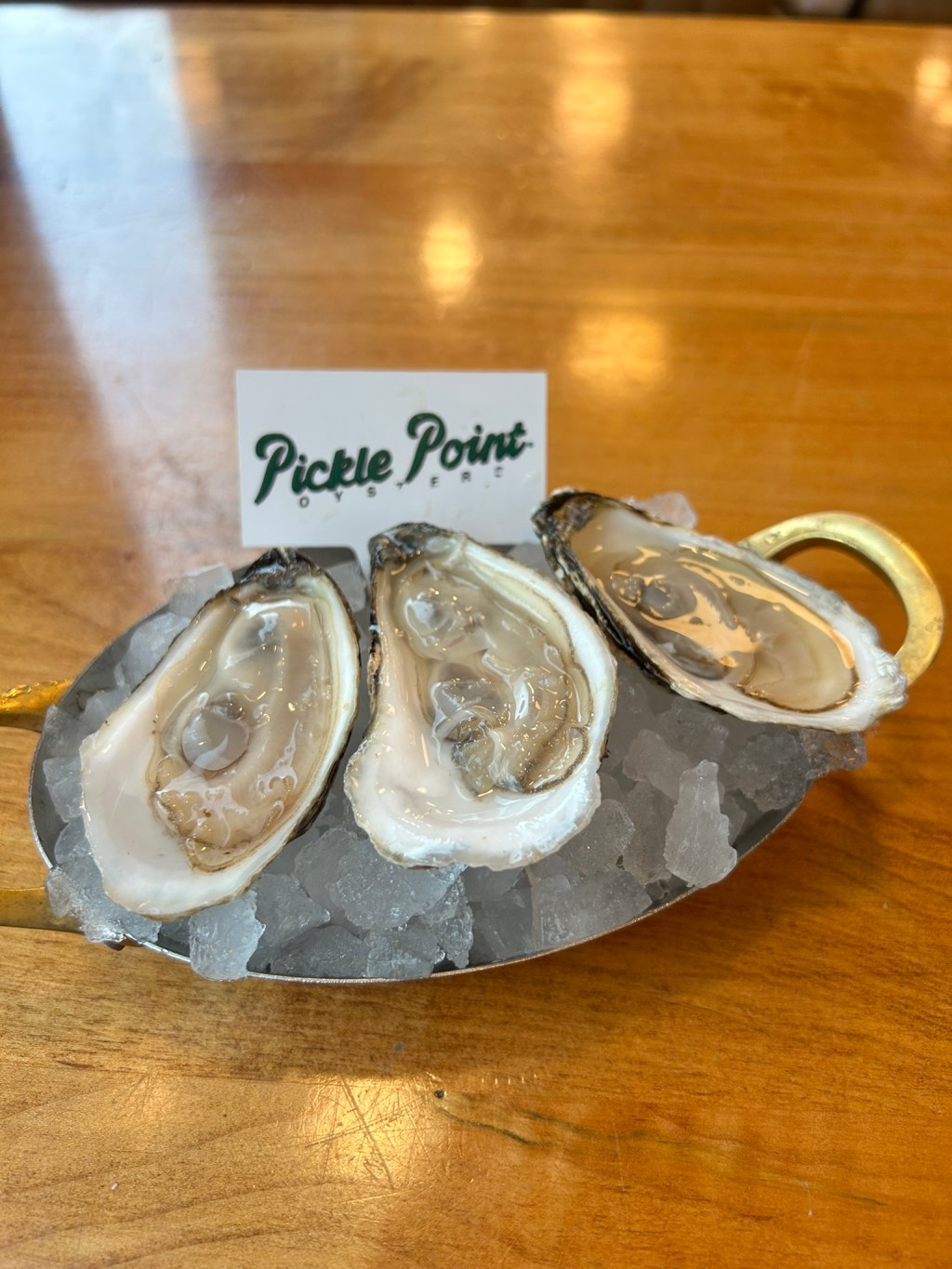
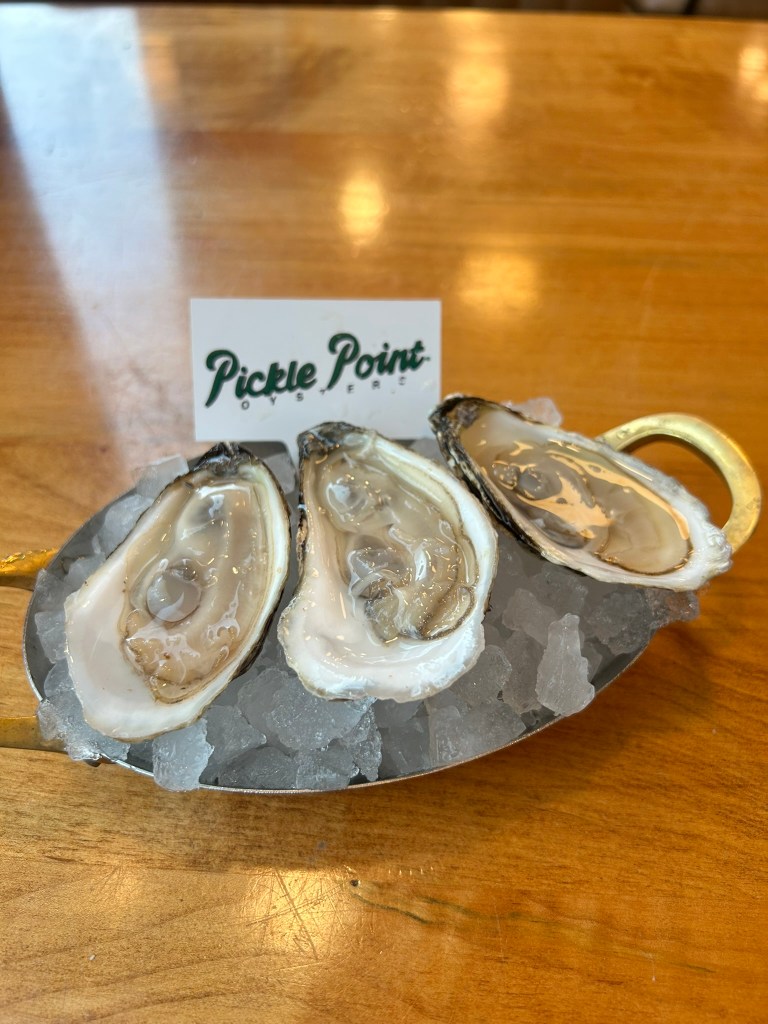
At dinner, I sat by the water and ate an Atlantic oyster. The “NS” I’d seen on restaurant menus for years finally made sense — Nova Scotia. I’d read somewhere that Pacific oysters taste different from Atlantic ones. Pacific: sweeter, softer. Atlantic: saltier, with a faint metallic edge.
 Ingrid ZH | Fangruo’s Cereal — Writing, Food, Travel & Coaching
Leave a comment