
01
I’m in a place called Cape Breton now. Last night I was on the south shore of Nova Scotia; today, the west; tomorrow, the east.
Driving along the coast here feels like a wilder version of California’s Highway 1, or maybe the Oregon coast. Technically I’m on the east side of Canada, but as I drive north, the ocean sits on my left — probably because I’m on a peninsula. The landscape reminds me a little of Acadia National Park in Maine. At moments, it even feels like Hawaii: the sea right there, right in front of me, undeniably real.
This land used to belong to New France, and it carried real military weight. If you look at a map, the northern tip of Cape Breton marks the northernmost point of Nova Scotia, guarding the entrance to the Gulf of St. Lawrence. Quebec City was France’s most important colonial stronghold in North America. The St. Lawrence River narrows as it goes — by the time it reaches Quebec City, it’s grown quite narrow indeed. Back then, Quebec’s connection to the Old World ran through the Atlantic shipping route, and to take Quebec, you’d first need to take Cape Breton, which guarded that route.
I set out from Halifax this morning, stopping first to stock up on snacks. I found a local Asian grocery store — better stocked, even, than the ones back home in Maryland. I picked up plain Vitasoy, my favorite drink from middle school. But what made me happiest was finding self-heating meal kits, similar to the self-heating hot pots back home. I happily grabbed a self-heating braised pork rice and a beef stew rice, already imagining a picnic by the sea. I’d brought two large tubs of freeze-dried food with me on this trip, but these self-heating rice meals turned out to be even more convenient — freeze-dried food needs boiling water, while these just need cold water poured in.
Standing in the parking lot sorting through my snacks, I felt a strange sense of dislocation. I don’t think I’ve eaten this well on any road trip before. Part of it is that I’ve finally learned to use my little camp stove properly. But the bigger part is that Kevin taught me a slower way of living.
I learned to stop — to give myself the time to actually eat well. In the past, I’d just buy a loaf of bread and a stack of canned tuna, making myself tuna sandwiches on the road. Traveling with Kevin, he’d always say: let’s find somewhere to eat properly. At first I wasn’t used to this — to me, it felt inefficient. Eating like that with Kevin meant losing an hour or two of driving time, just for a meal. But eventually I got used to it, because my mind finally learned to listen to my body: eat slowly, enjoy it, move forward slowly too.
Today I picked a spot by the road for a picnic, looking forward to that bowl of braised pork rice. Self-heating meals like this come in many parts — an activated carbon packet, the braised pork packet, water to activate the carbon, rice, vegetables, and water to mix with the food itself.
I expected it to be cold, but it caught me off guard just how cold it actually was. I tried opening the packaging at a roadside rest area. The wind was fierce — every time I opened one piece of packaging, I had to quickly stuff the trash in my pocket before it blew away. It wasn’t until the wind had literally brought tears to my eyes that I finally gave up and retreated to the car. After a fair struggle, I got the meal heated and ended up eating it in the car after all — happily, in the end. Romance, it turns out, doesn’t stand a chance against cold.
Even eating in the car, though, I caught sight of a wild double-petaled tulip blooming right by the tire.
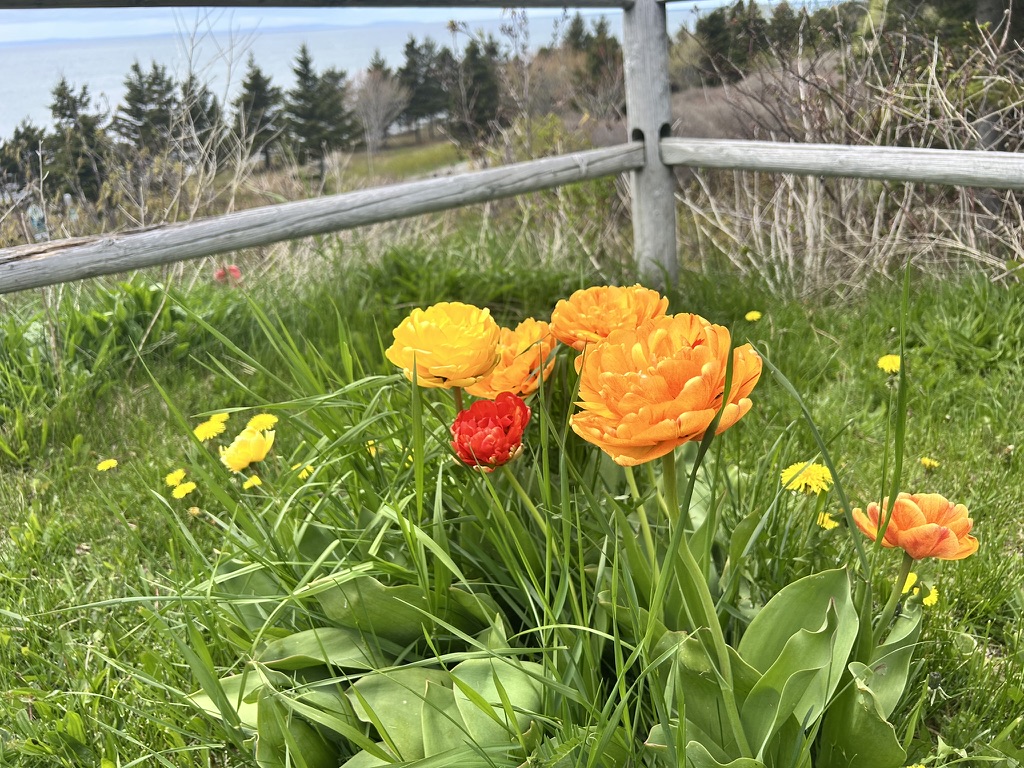
One bowl of braised pork rice in, and my whole body warmed up at once.
02
Traveling alone means taking care of your body — and taking care of a mind that’s prone to anxiety.
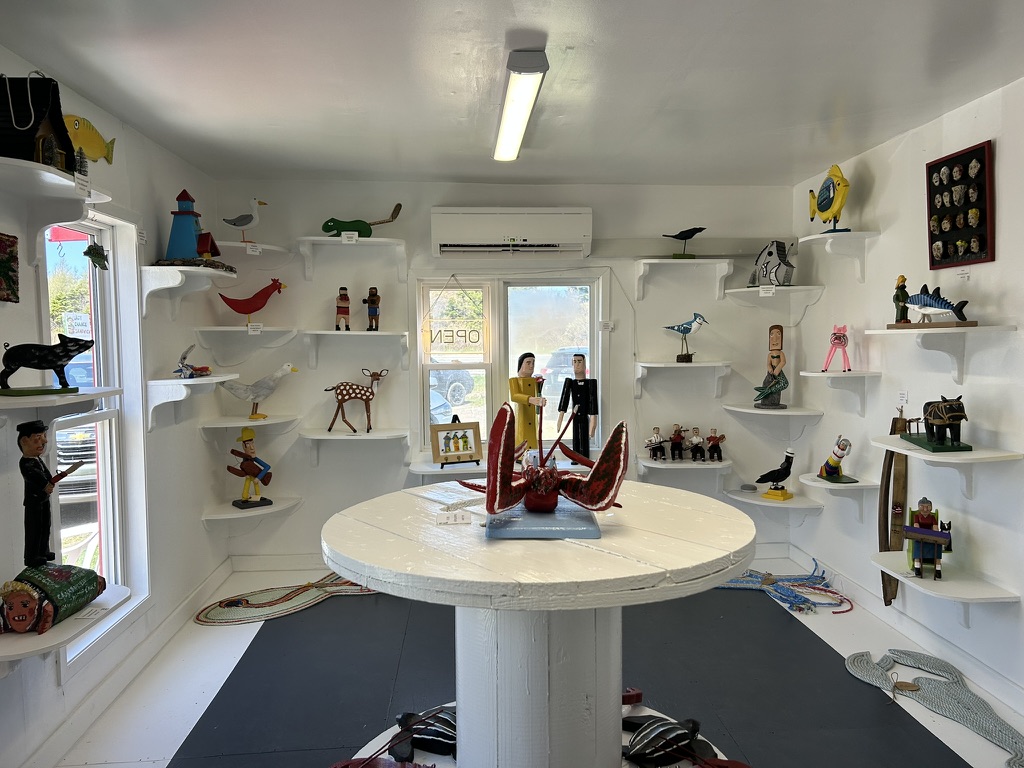
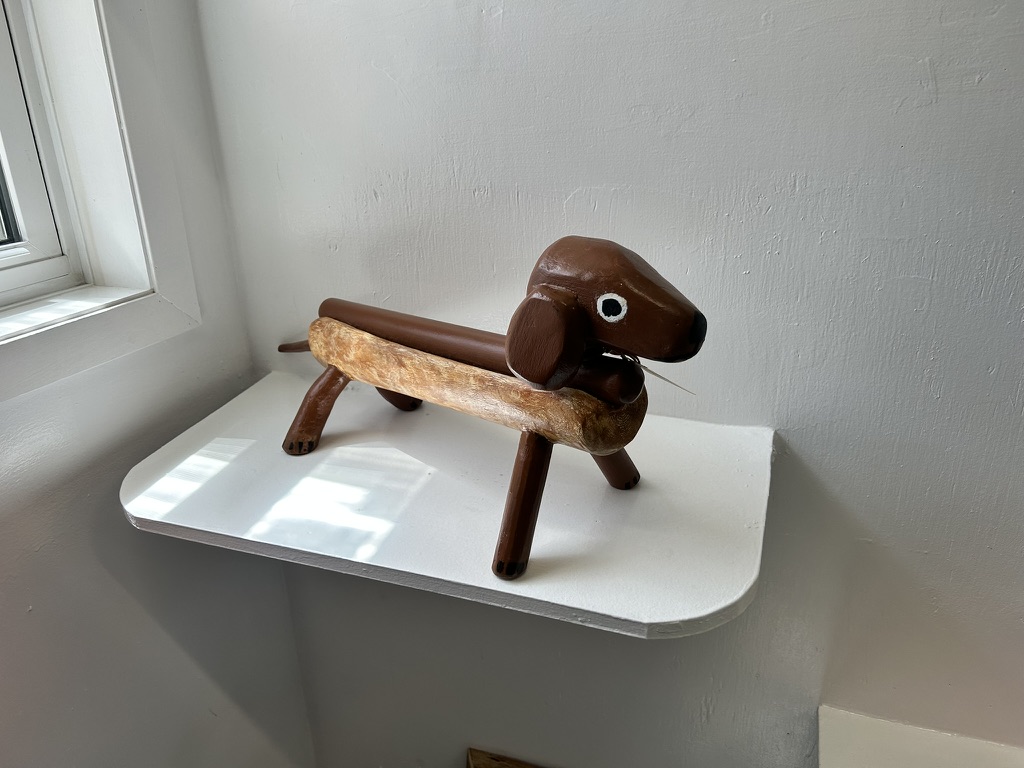
Even on work days I find myself anxious about losing signal, but I found a decent little café in the town I stayed in that Friday. Next to it was a gift shop, full of locally made crocheted ornaments, wood carvings, and various paintings. One piece I loved had a kind of Fauvist quality — from a distance it looked like bold, dramatic brushstrokes, but up close it turned out to be an assembly of different wood blocks. The layered mountains were built from blocks of varying sizes, each one carefully sanded and individually painted, the rough seams between them giving the whole piece a wild, untamed energy. The shopkeeper told me the wind here gets brutal, especially in winter — anything left outdoors has to be tied down securely. Sometimes the wind blows out a window on one side of a house. When that happens, people open or even break a window on the opposite side, just to save the roof.
Locals seem remarkably unbothered by it, almost used to it by now. Once, despite a wind warning in the forecast, everyone still went out to the community center for a dance night. Sure enough, by the time the dancing ended, the storm had hit — everyone ended up spending the night there. The next morning, they stepped outside to find barely any car windows left intact.
I thought back to my roadside picnic earlier — and it isn’t even winter yet. It’s late May, which back home on the U.S. East Coast would practically count as summer. And yet the wind here was still fierce. Locals told me this has been an unusually cold spring. The night before, camping in my car, I’d run to the bathroom before bed just to keep my body warm for a few extra seconds.
Traveling alone is a completely different experience from traveling with friends or a partner. When you hit a snag — when the trip doesn’t go smoothly, when plans fall apart, or when you mess something up yourself — you’re the only one there. Whether it’s pure joy or pure despair, you’re the one climbing into the sky, and you’re the one sinking to the bottom of the sea, alone either way.
The nights stayed cold. I slept in my clothes, arms wrapped tightly around my own shoulders. Mornings were cold too — I’d dig through my luggage, shivering, for the propane canister, fumbling with gloved hands to light the stove just to make myself a cup of tea.
The next day I headed into the national park. The trail I most wanted to hike was closed for maintenance that day, so I picked a shorter route instead — which meant I could also leave myself time to stop and take photos along the way.
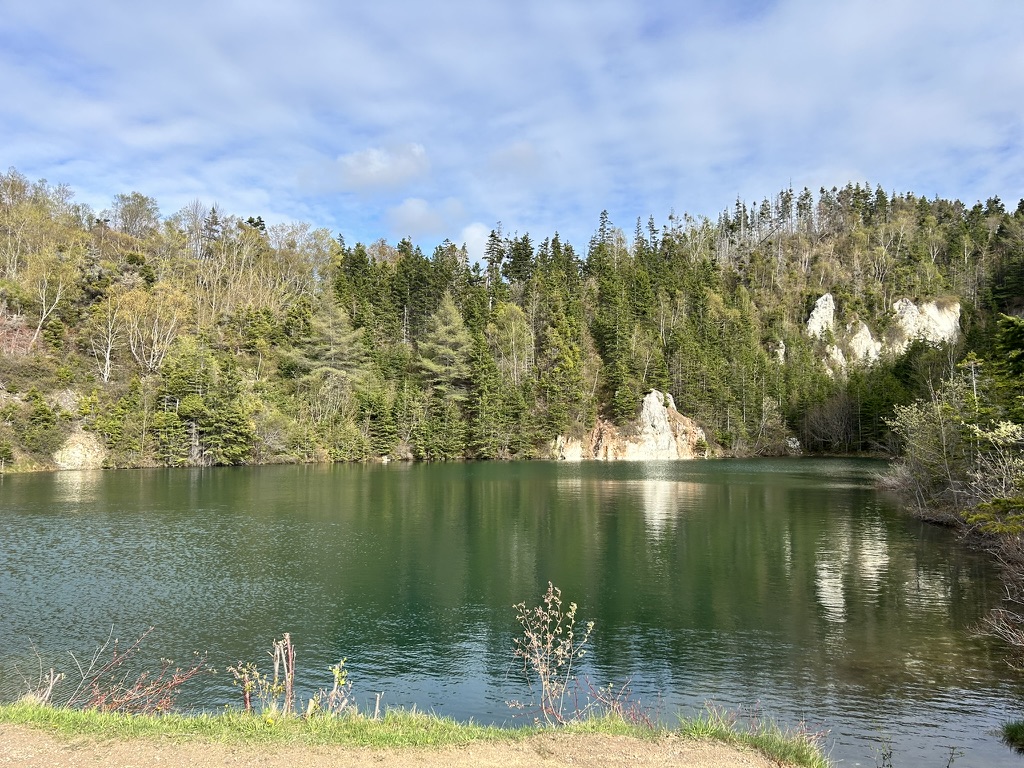
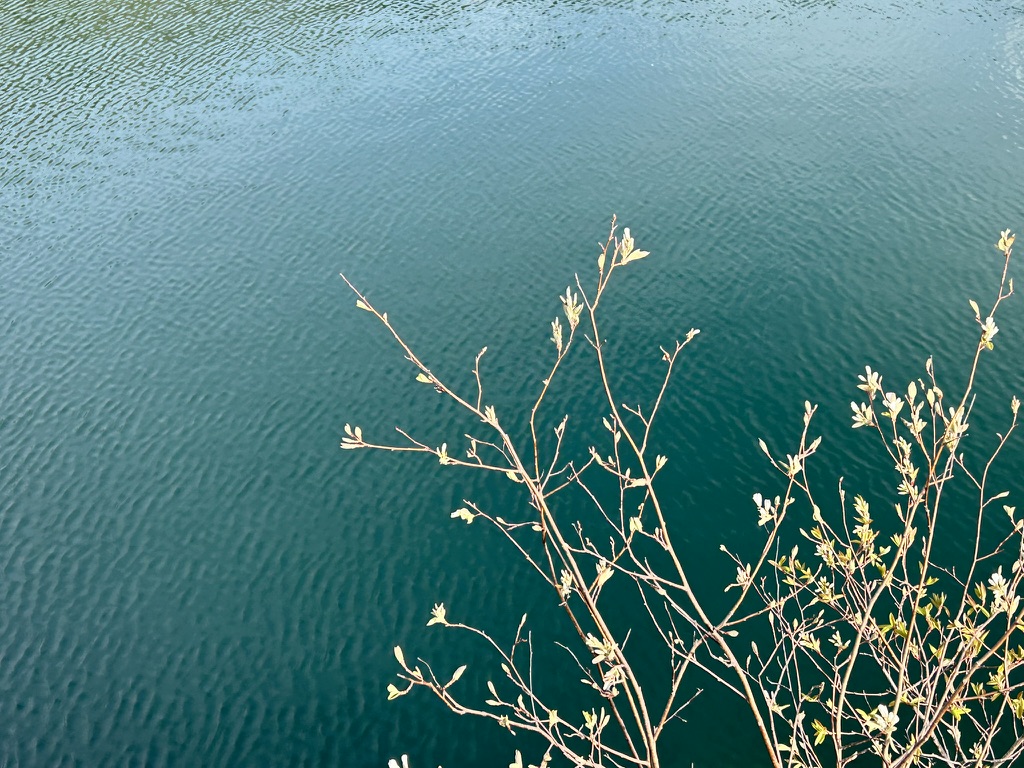
Cape Breton is stunning — the whole peninsula wrapped in coastline, and I kept stopping and starting along it. Kevin’s mom loves rocks, so I found myself pausing at a pebble beach too, looking for pretty stones. Up close, the ocean looked hazy; from a distance, a deep, clear blue. The coastal road was beautiful, though some stretches curved sharply, so I drove slowly. The car speakers played a man’s voice humming a tune I didn’t recognize. For most of this trip, I had no signal at all. I had music and podcasts I liked downloaded on my phone, but when I actually had signal, I rarely had the patience to listen to anything unfamiliar. I pulled over again, gazing at a lake tucked into the forest. The cold spring had already taught me a good lesson: no matter how sunny it looks outside, staying in the warm car is always the better plan. The spring wind rippled across the lake’s surface, and I sang along loudly with the man on the radio.
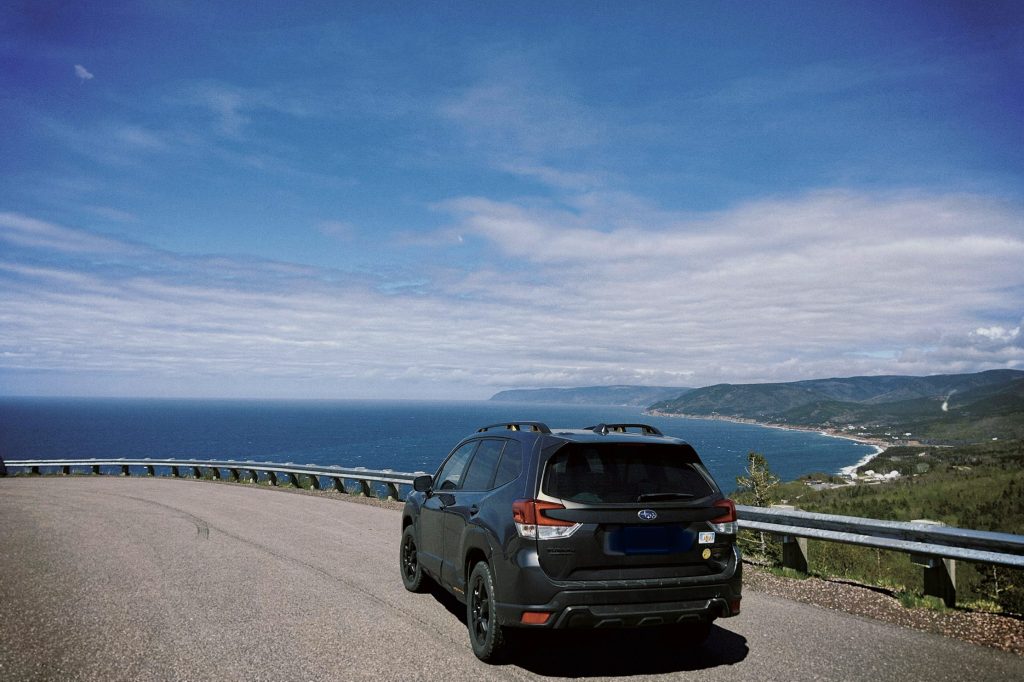
Driving back onto the road, I saw a few cars pulled over. Someone waved me down, and I rolled down my window to talk.
It turned out a man traveling alone on a motorcycle had hit a guardrail while taking a curve — his collarbone, femur, and ribs all seemed broken. A few kind travelers had stopped to call an ambulance, but with no signal, none of the calls were going through.
“I have a satellite phone,” I said.
Before leaving the U.S., I’d hesitated over whether to rent one — about two hundred dollars for a month. I was glad I had. The injured man’s name was Mohammed, fifty-six years old, with two kids. Everyone there did what they could to help him. May in Cape Breton was still cold, around 40°F outside. People took off their coats and laid them over him; someone gently pressed the fabric down so the wind wouldn’t carry it off. He ended up covered in a small patchwork of brightly colored jackets.
I asked the others if they were cold — I had blankets in my car. They waved me off. We stood there on the roadside until the paramedics finally lifted him into the ambulance, and only then did we leave. I said a quiet prayer for him. As fellow travelers on the road alone, how fortunate we are to be able to rely on the kindness of strangers.
So many times, I’ve been the one receiving help. This time, I feel lucky to have been the one who could give it.
Cape Breton Highlands National Park: Practical Guide
I just wrapped up a month-long road trip along Canada’s east coast — finally home, which means it’s time to write up the practical details! Here’s everything I learned about Cape Breton Highlands National Park in Nova Scotia.
Timing & Where to Stay
I visited in late May, just before peak season kicks in. The upside: far fewer crowds. The downside: it’s cold. If you’re camping, make sure to pack plenty of warm layers.
I stayed at two campgrounds inside the park — Cape Breton Highlands: Chéticamp and Cape Breton Highlands: Broad Cove — both of which have flush toilets.
There are two main hubs for accommodations: Chéticamp on the western side of the park, and Ingonish on the eastern side.
Food & Supplies
Most visitors fly into Halifax and drive to Cape Breton from there. If, like me, you can’t go too long without Asian food, Halifax has excellent Asian grocery stores — worth stocking up before heading into the park.
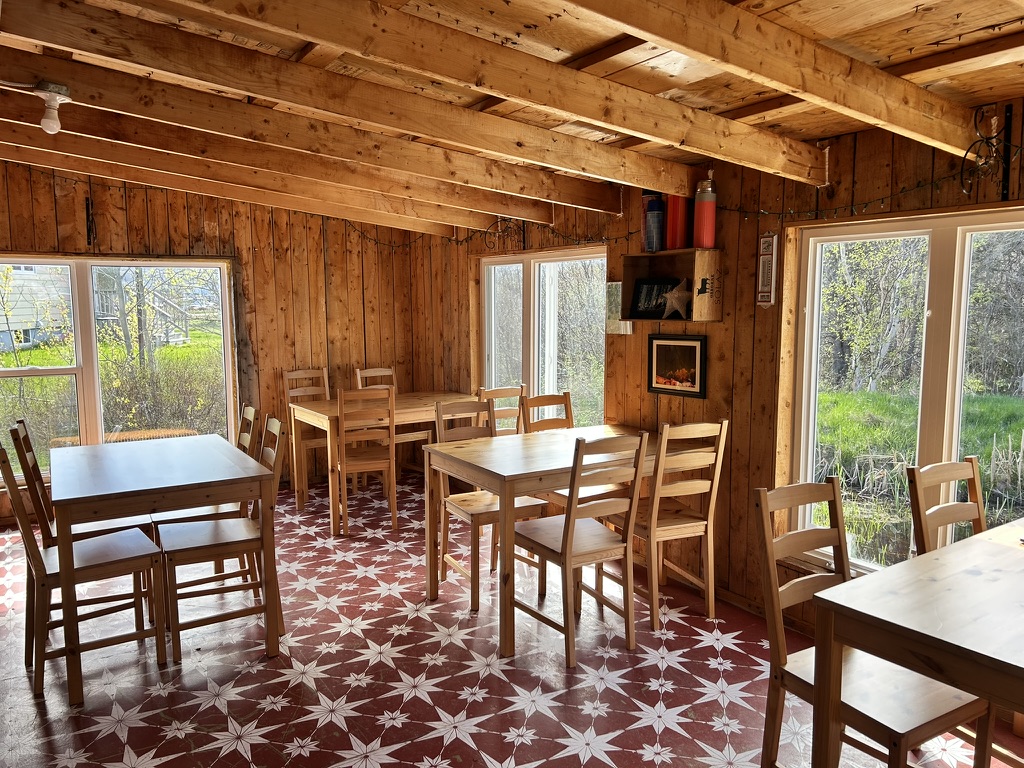
Chéticamp is the last town before entering the park, so it’s a good spot to eat or fill up on gas — there won’t be another gas station for a while after this. The town has a charming café with Wi-Fi called Freya & Thor Gallery (the one I mentioned earlier in this post). I’d recommend their salted caramel latte and blueberry scone — when you’re somewhere this cold, the local berries and berry pastries are worth trying.
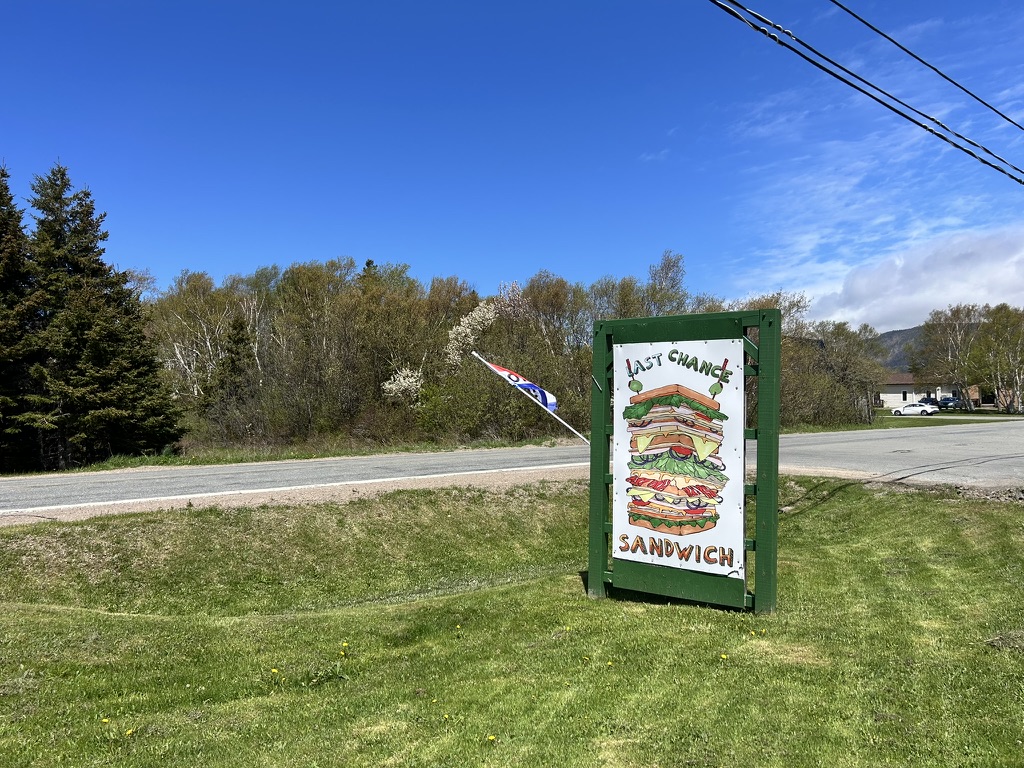
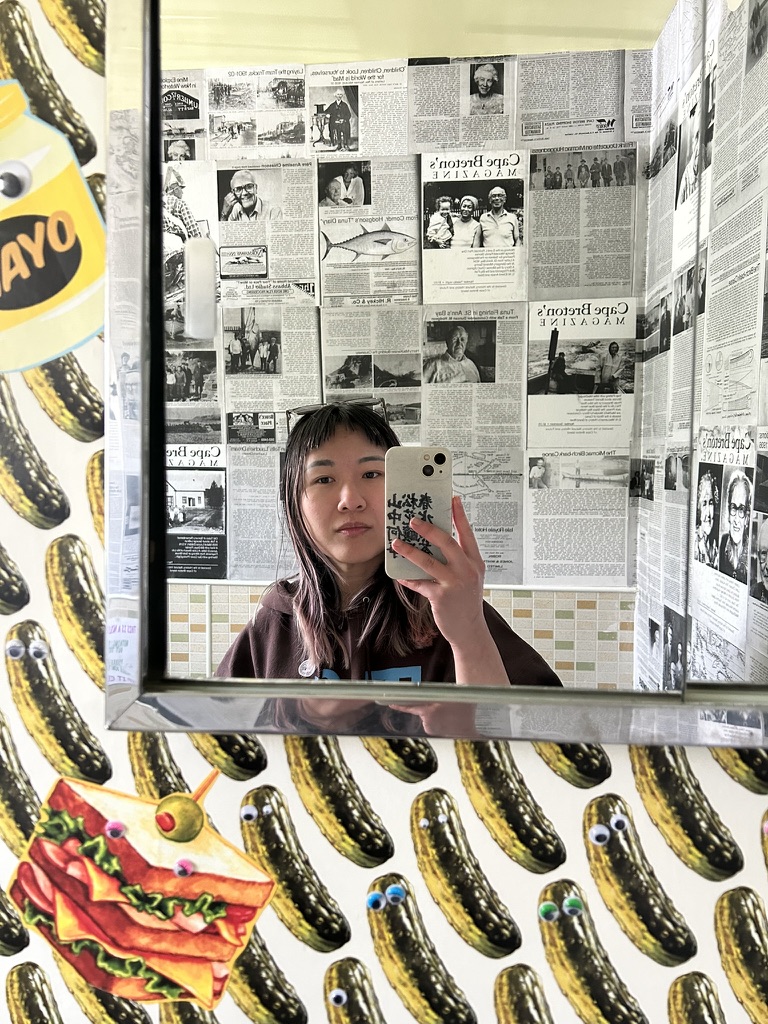
Chéticamp also has a sandwich shop called Last Chance Sandwich, which is worth a stop too — just don’t expect Wi-Fi there.
Ingonish is the town at the park’s eastern entrance, a bit larger than Chéticamp. This area has nicer hotels and B&Bs, so if comfortable lodging matters to you, this side is the better choice.
Hiking Trails
- Gypsum Mine Lake — A short, easy hike (about 1 hour) just before entering Chéticamp. Leads to a lake formed in a former quarry.
- Skyline Trail — One of the park’s most famous hikes, about 2 hours, near Chéticamp. I wasn’t able to do it myself since it was closed for maintenance the day I visited. No reservation needed in late May, but if you’re visiting in summer, note that this trail requires advance booking.
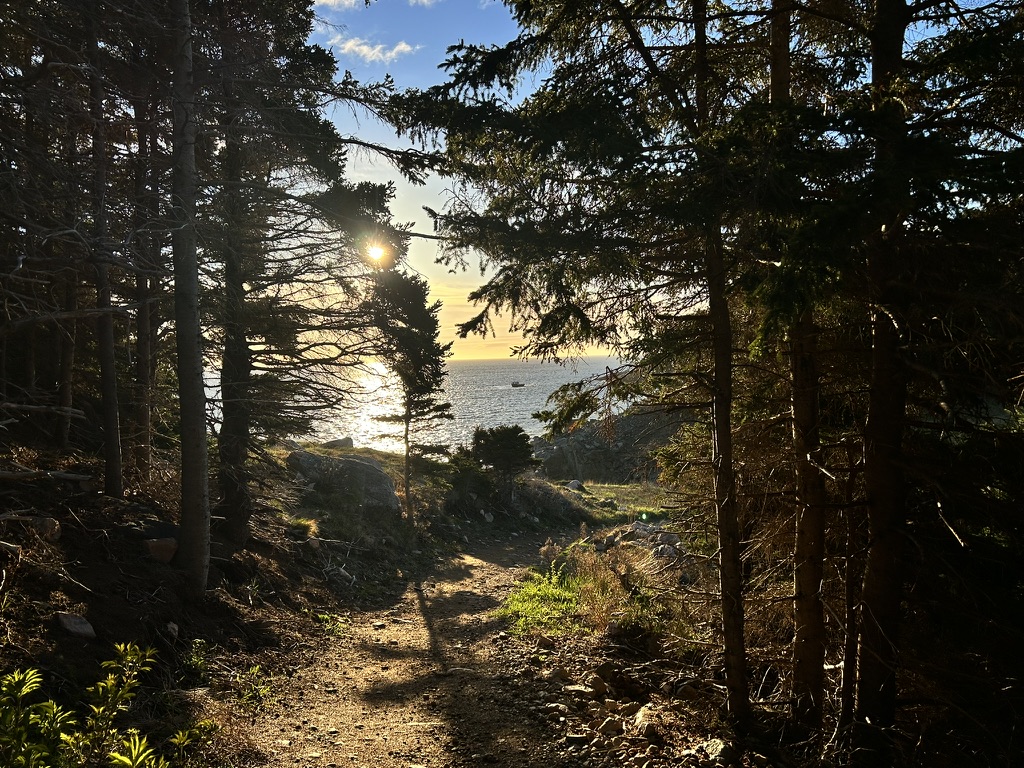
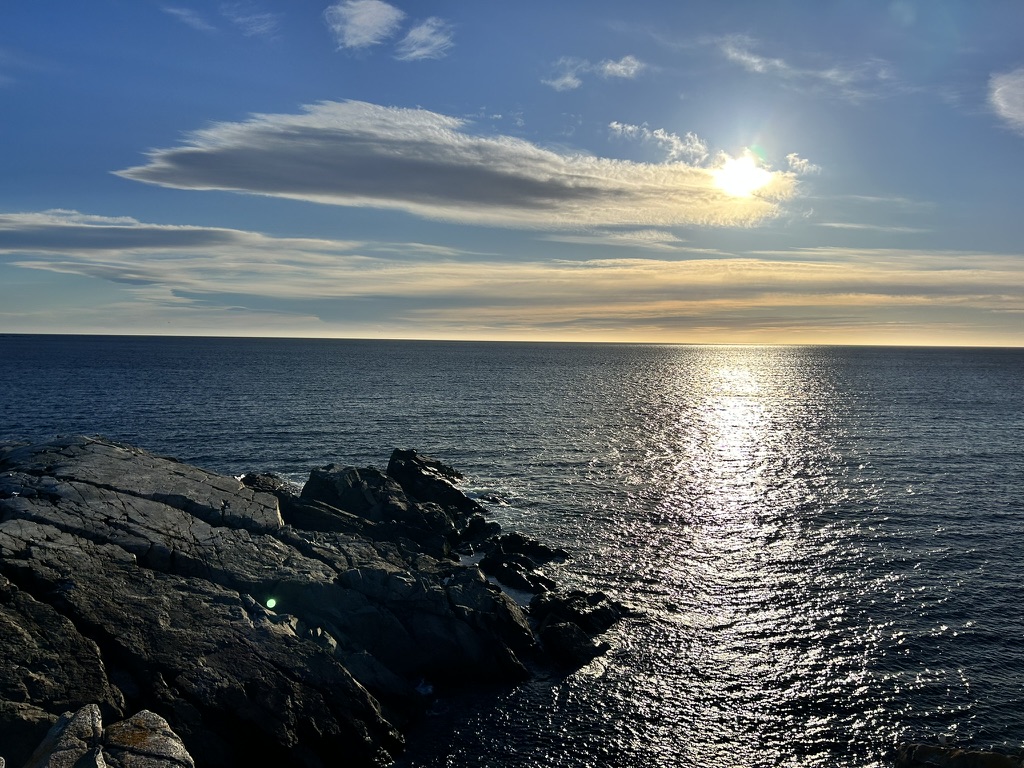
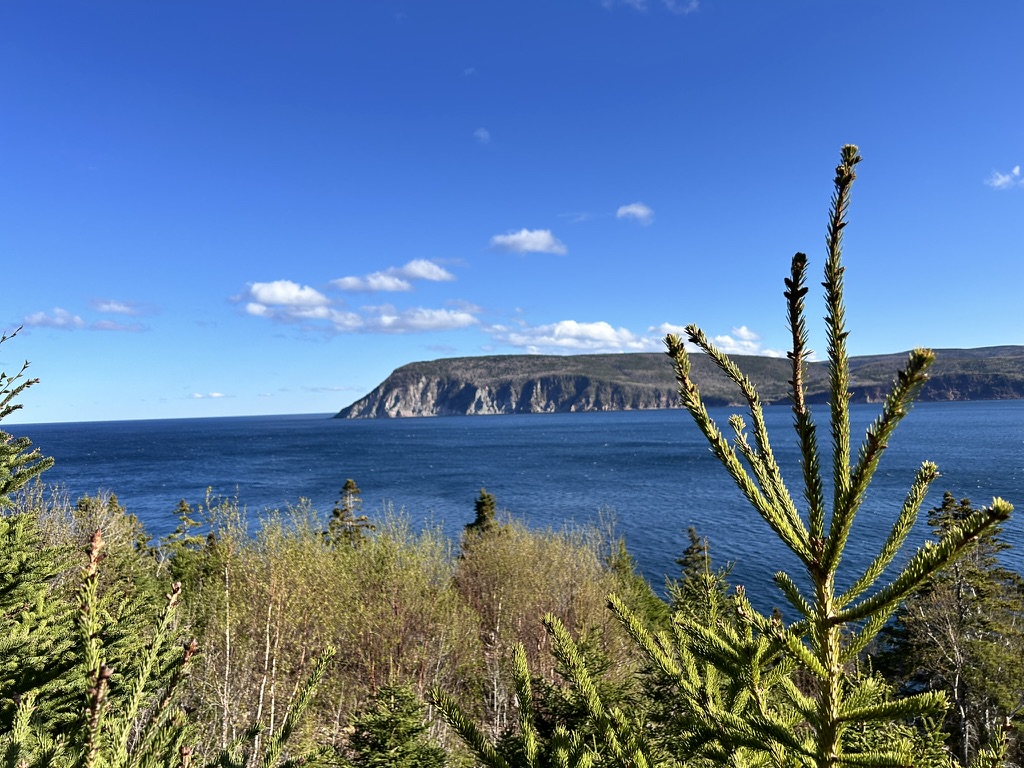
- Middle Head Trail — An easy hike, roughly 1.5–2 hours, near Ingonish. The trail feels surrounded by ocean on all sides — highly recommend.
Gypsum Mine Lake
Middle Head Trail
Freya & Thor Cafe and Gallery
Last Chance Sandwich


Leave a Reply