
I did a hike in Cape Breton National Park. The trail was beautiful. The sea stayed with me the whole way up, shimmering at my side. By the time I reached the summit, it was around seven in the morning. Fishing boats were already out on the water, pushing softly through the waves, with gulls circling around them.
After the hike, I had a ferry to Newfoundland to catch.
There is something beautiful about the way a trip takes shape, from the first idea to the moment it becomes real. I had been planning this one for over three years. On a road trip to Alaska, a friend I met along the way told me you could see icebergs in Newfoundland. From that moment, the idea never left me.
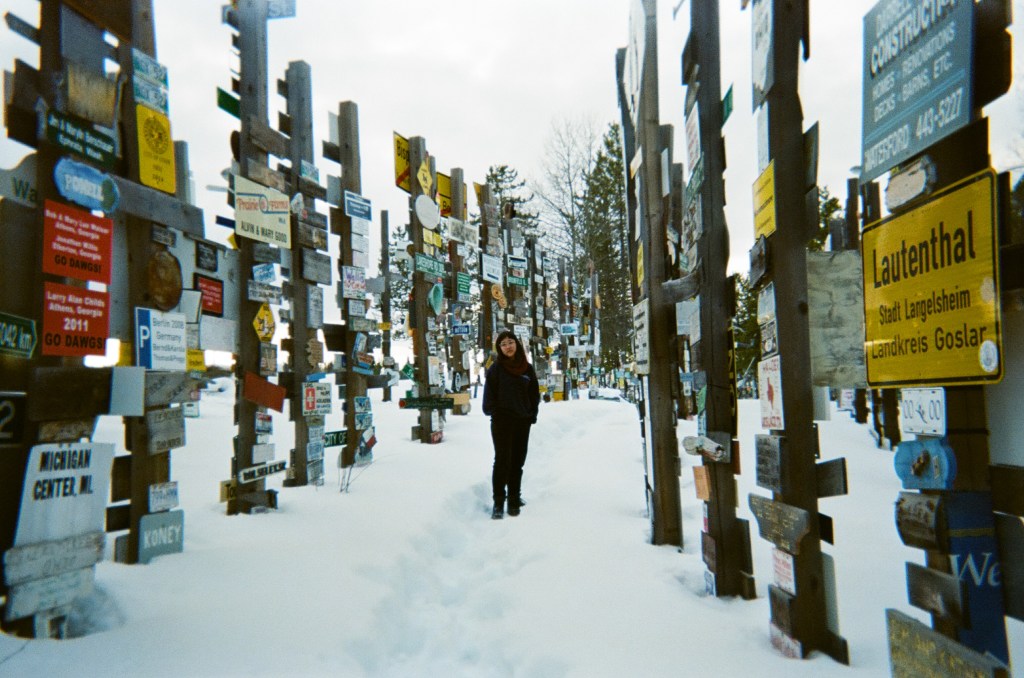
(Watson Lake, YT )
I was driving. A little while back, I had passed a road sign that read: Ferry to NL. My head buzzed. I felt like I might cry. A name on a map had become a name on a green highway sign — something that had taken so long, and yet arrived so suddenly. The same feeling as years ago, driving to Alaska, seeing the word “Alaska” on a road sign for the first time. Personal ambition might be only a small part of why any of us set out. I have maps of Alaska and Canada pinned to my bedroom ceiling. Every morning, the first thing I see when I open my eyes is the map. Those shapes of land and water whisper to me, day and night, in the names of places I haven’t been to yet. The signs and the maps murmur to each other: north of Maryland, where I started, is Pennsylvania; north of that, Connecticut; then Maine; and Maine’s signs carry you all the way to Canada. From names I know well, to names I half-recognize, to names I don’t know at all, and finally to the names that have haunted me for years.
It was never really me choosing to leave.
It was the distant places, quietly radiating their beauty into my dreams.
From Ingonish, the small town on the eastern edge of Cape Breton where I had spent the previous night, to North Sydney, where I would board the ferry, was about an hour and a half by car. The drive passes through Cape Breton National Park and follows a long stretch of one of Nova Scotia’s most celebrated roads: the Cabot Trail. The road is named after John Cabot, the anglicized name of the Italian explorer Giovanni Caboto, who, after the Vikings reached North America in the eleventh century, was the first European to set foot on the North American mainland.
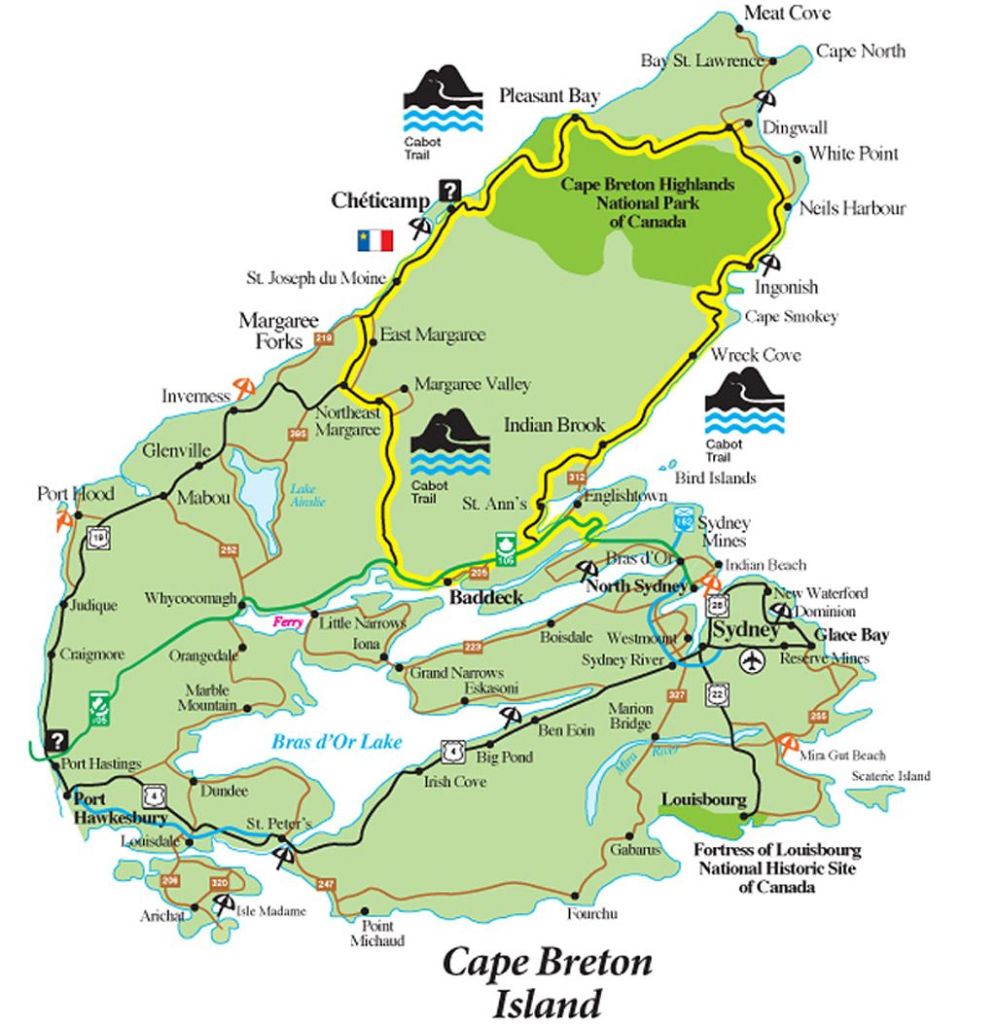
I drove on. The weather had turned warm for once, and I pulled over to take in the view. Small boats sat still on the water, suspended like pebble rocks frozen in the instant before they hit the surface. The sea was wide, and from where I stood it was nearly impossible to detect any movement — yet the boats kept announcing themselves, their wakes spreading outward in long, slow ripples.
I was driving fast when a police officer pulled me over. My heart jumped because I was sure I’d done something wrong. But I hadn’t been speeding. He just wanted me to slow down and watch out for the runners on the road. I had driven into the annual Cabot Trail Relay Race, a running event held along the trail. Since there was no hurrying now, I decided to stop. I pulled into the parking lot of a café by the roadside it was packed. Inside, I found volunteers busily preparing supplies for the runners. The server warned me that the butter pecan tart I’d ordered might be too sweet. I bit into it anyway, still warm, and a thick ribbon of maple syrup dripped down my hand.
It was a delicious tart.
The ferry terminal at North Sydney was the most impressive I encountered in all of northeastern Canada — two floors, spacious and spotless, with plenty of seating. I connected to the terminal’s Wi-Fi and spent the wait calling friends and family, catching them up on the journey so far.
The ferry ticket came in a beautiful cardboard sleeve printed with teal-blue waves. The ferry company’s logo was semi-transparent, half-hidden in the foam.
Printed inside was a line:
Adventure starts with the ocean beneath your feet.
Late May to early June is the season for icebergs in Newfoundland. For three years running, every May, I had made a quiet wish to come here. This May, I finally did.
Kevin had given me a gray moonstone ring. It wasone of his engagement gifts to me. Gray moonstone was first discovered in Newfoundland and Labrador. He had known about this dream of mine for a long time.
He said: after we’re married, I hope you will always be yourself.
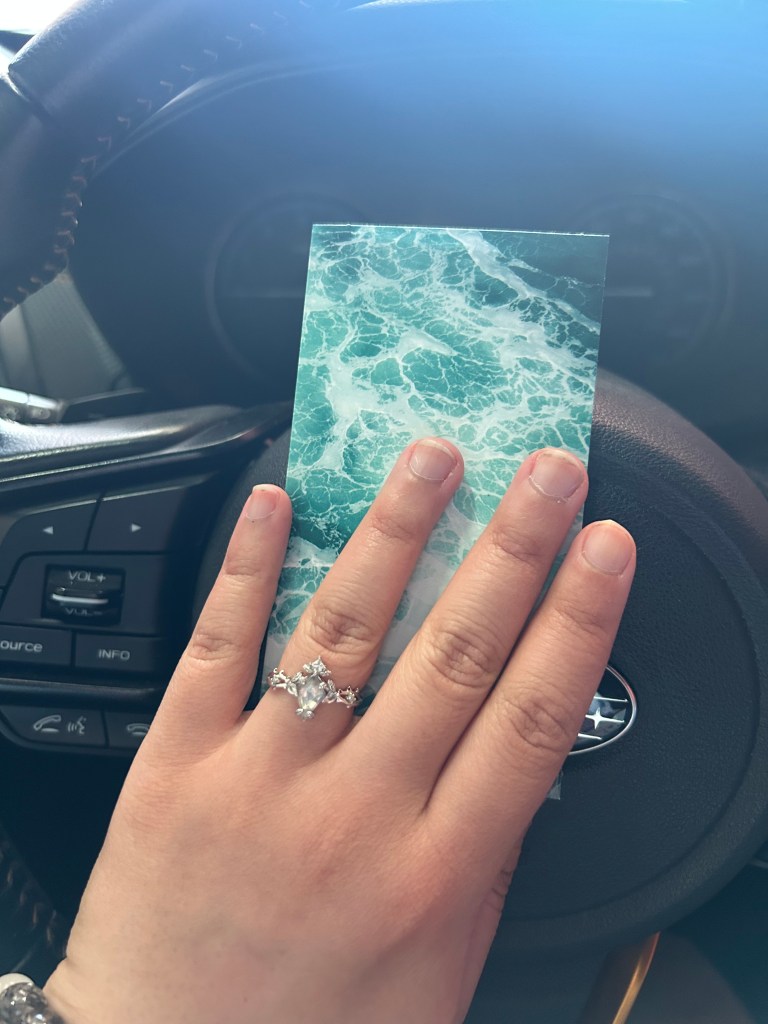
There had been moments of doubt before I left. Dozens of hours of driving, a few ferries. But I made it.
Kevin couldn’t come. I boarded the ship wearing the ring, binoculars in hand. It was a gift from my father-in-law.
And yes, I cried. Happy tears.
The passenger cabin was surprisingly comfortable, with large windows all around for watching the water. The seats were soft and generous. It wasmore comfortable, honestly, than business class on a plane. I was reading about the Canadian explorers who mapped Great Slave Lake and the Coppermine River. Mapping a continent, it turns out, is the work of generations. People pushed west from Quebec City and found Montreal, followed the rivers to the Great Lakes, then to Great Slave Lake, then discovered it drained into the Arctic Ocean. By the time Mackenzie first crossed from the Atlantic to the Pacific, several lifetimes had passed. Here I was, crossing the Cabot Strait between Nova Scotia and Newfoundland without a second thought. It is a very good thing, being alive now.
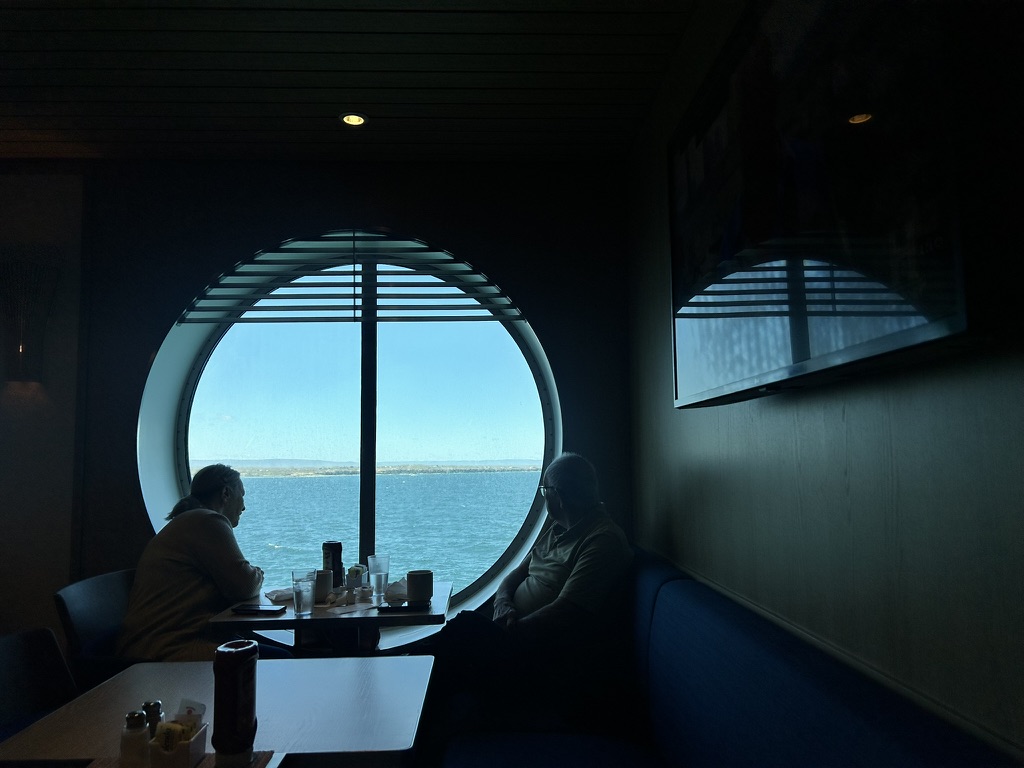
The ship rolled and swayed. My body found its own solution to seasickness: sleep. When I woke up, I made my wobbly way to the restaurant and ordered Cod au Gratin, a Newfoundland specialty — cod poached in cream sauce, topped with cheese and baked. The cod was fresh, of course. It was also too salty, and the cheese and cream were heavier than I would have liked. But I was happy; trying new food always comes with some risk. An elderly couple sat by the porthole as the ship rose and fell with the waves. It looked like a scene from a film.
I went looking for water. Other than the restaurant, there were no drinking water taps anywhere on the ship. I wandered over to the bar and started chatting with the bartender. The cooler was stocked with beer brewed from glacial water. She told me, somewhere between impatient and proud: “That’s thousand-year-old glacier ice, you know.”
I was about to walk away. I was already a little seasick — getting drunk on top of that seemed like a terrible idea.
“Give me your water bottle,” she said.
She scooped in three spoonfuls of ice and added some water.
The place I was heading to is called Newfoundland. It was a name given by King Henry VII of England when John Cabot arrived on these shores, meaning simply: newly found land. I shook my water bottle and thought about how the icebergs waiting for me out there were probably not much older than the ice in my hand.
As the ferry approached the dock, passengers crowded to the windows. The woman next to me had binoculars in one hand and her phone in the other.
She shouted into the phone:
“I can see snow on the mountains! Don’t you tell me there’s no snow. We’re almost there!”
Practical Guide for Newfoundland Ferry:
I’d always dreamed of road-tripping to Newfoundland to see icebergs. After three years of wishing, I finally made it happen this past May! Here’s a practical guide to the ferry crossing from Nova Scotia to Newfoundland — one of the trickier logistics to figure out.
My Route
Starting from the US East Coast, I drove up through Maine, then to Prince Edward Island (PEI), took a ferry from PEI to Nova Scotia (NS), and then another ferry from NS to Newfoundland (NL).
Planning Ahead
There are two ferry routes from NS to NL:
- Western route: North Sydney → Port aux Basques, approx. 7 hours
- Eastern route: North Sydney → Argentia, approx. 16 hours
The Argentia route doesn’t open until June, so in late May only the western route is available. The two sides of the island offer very different experiences — I’ll cover that in a separate post! Book your tickets in advance on the official website; sailings can fill up quickly in peak season.
Ticket Prices (off-season reference)
- Passenger only: approx. CAD $17
- Passenger + car: approx. CAD $50
- RVs and trailers are priced higher
- Bunks and private cabins available as add-ons
Onboard Facilities
There’s a restaurant, a bar, and a gift shop. The Wi-Fi signal is very weak — download your podcasts, shows, or offline maps before you board.
Things to Know
- Once the ferry is underway, passengers cannot return to the car deck. Before leaving your car, make sure you have: warm layers (late May is still genuinely cold), any medication you might need, snacks, and water
- The crossing can be quite rocky — seasickness is real, so come prepared with medication if you’re prone
I spent about two weeks in Newfoundland and Labrador, and I’ll be sharing more guides on what to do on the island — including where and how to spot icebergs 🧊 Stay tuned!
 Ingrid ZH | Fangruo’s Cereal — Writing, Food, Travel & Coaching
Leave a comment